Why Ants Keep Returning in Florida Homes After DIY Treatment
Seeing ants return after you have already tried to treat them is frustrating, but it is extremely common in Florida homes. In most cases, recurring ant activity is not caused by resistance or poor timing. It happens because DIY treatments rarely address the source of the problem.
Key Takeaways: Why DIY Ant Treatment Often Fails
- Most ant infestations originate from outdoor colonies, not the ants seen indoors.
- DIY sprays and surface treatments only kill visible ants, leaving the colony intact.
- Ant scent trails continue attracting new ants, even after the original ants are gone.
- Different ant species require different control methods, and misidentification leads to repeat activity.
- Professional ant control targets colonies, entry points, and contributing conditions, not just active ants.
Why Killing Visible Ants Does Not Eliminate the Infestation
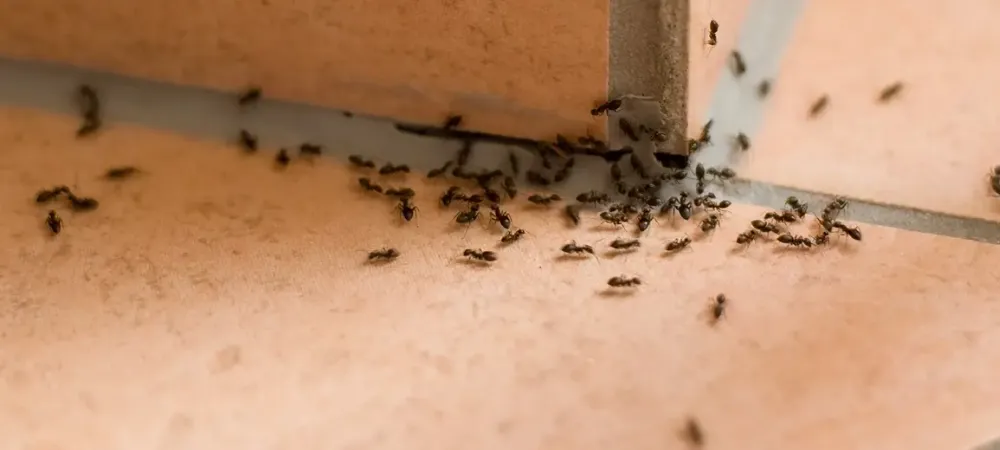
The ants you see inside your home are only a small portion of a much larger colony. These worker ants are sent out to search for food and moisture, then return to the nest to communicate what they find.
DIY sprays may eliminate ants on contact, but they do not reach the colony. As long as the colony remains active, new worker ants will continue replacing the ones that were killed.
Where Ant Colonies Are Actually Located
In Florida, many common ant species nest outdoors in soil, mulch, lawns, or near foundations. Ants typically enter homes only when they find a consistent food or moisture source.
Because the colony is usually outside, indoor-only treatments provide temporary relief at best. Without addressing outdoor nesting areas and entry points, ants are likely to keep returning.
Why DIY Ant Sprays and Surface Treatments Don’t Work
Many store-bought ant products are designed for fast results, not long-term control. While they may reduce activity briefly, they do not spread back to the colony.
Some ant species respond to disturbance by splitting into multiple colonies, a process known as budding. When this happens, improper treatment can actually increase ant activity, making the problem more difficult to control.
How Ant Scent Trails Cause Ants to Keep Coming Back
Ants rely on scent trails to guide other workers to food and water sources. Once a trail is established, it can remain active even after ants are removed.
Without properly breaking these trails, new ants will continue entering the same areas, giving the impression that ants are returning repeatedly despite treatment.
What Attracts Ants
Recurring ant problems are often tied to conditions that DIY treatments do not resolve, including:
- Moisture buildup near sinks, bathrooms, or utility areas.
- Accessible food sources, such as crumbs, pet food, or trash.
- Small entry points around doors, windows, or utility lines.
As long as these conditions remain, ant activity is likely to continue.
Why Ant Species Identification Matters
Not all ants respond to the same control methods. Some species are attracted to bait-based treatments, while others avoid them entirely.
When the species is misidentified, DIY treatments often miss the behavior driving the infestation, leading to short-term improvement followed by recurring ant activity.
When Professional Ant Control Is the Right Next Step
Professional ant control is recommended when:
- Ants return repeatedly after DIY treatment.
- Multiple areas of the home are affected.
- Outdoor ant activity is visible near the foundation.
- The source of the infestation cannot be identified.
Deans Services provides professional ant control focused on colony-level treatment, entry point identification, and contributing conditions. By addressing the cause of the problem rather than just visible ants, recurring activity can be reduced more effectively.